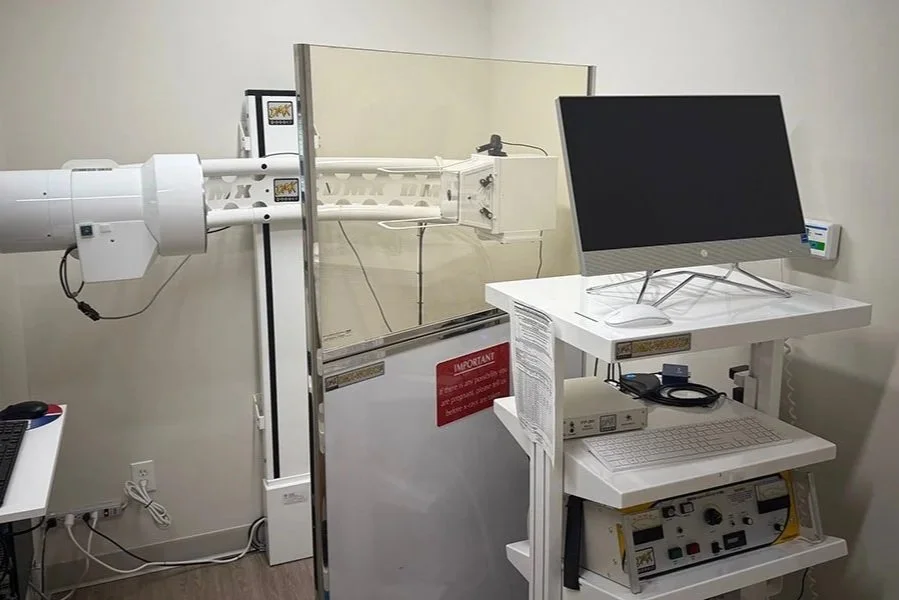
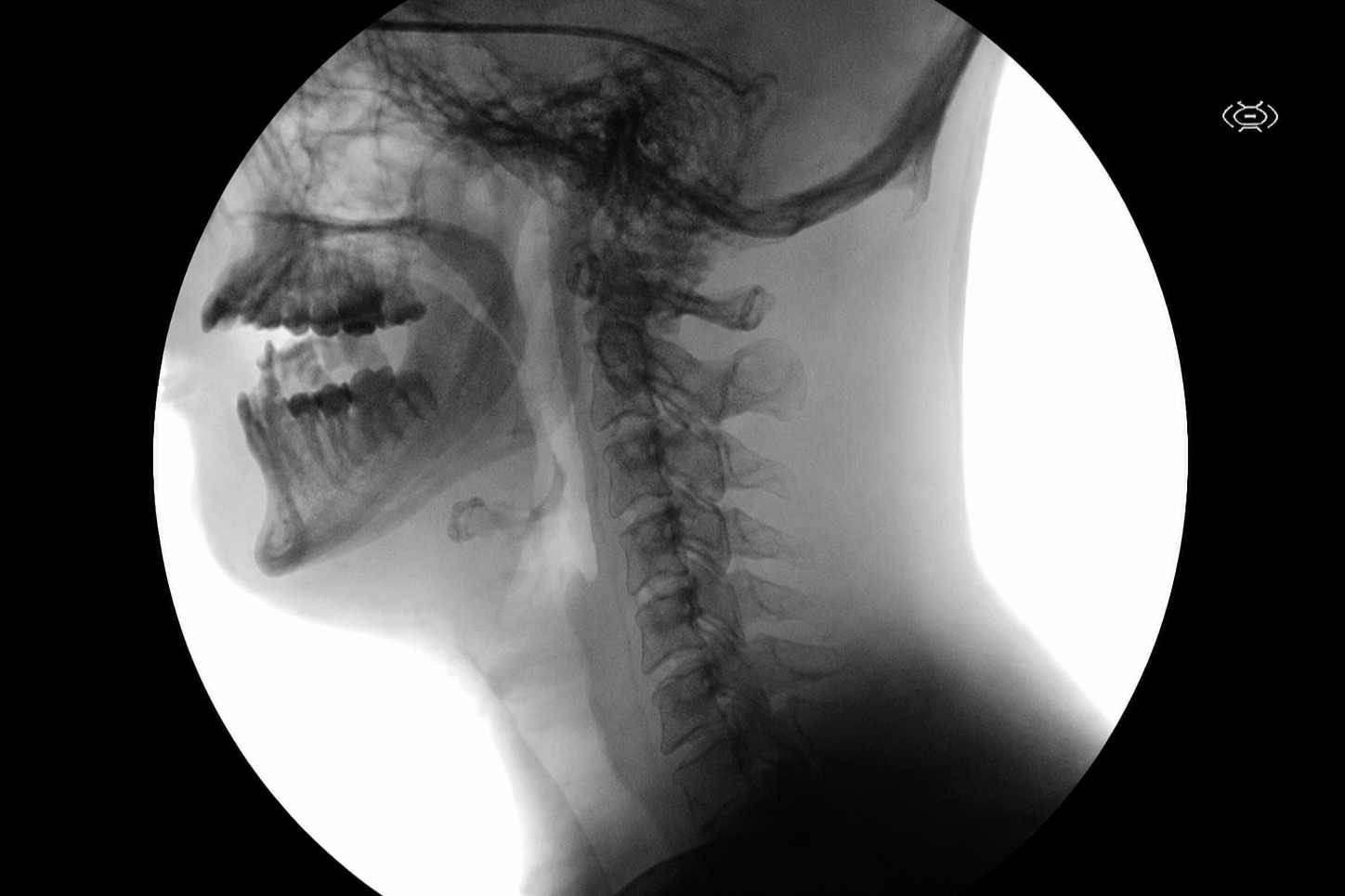
Digital Motion X-Ray, commonly called DMX, is a specialized X-ray exam that records real-time video of the spine and joints. Unlike a standard X-ray, which captures still images, DMX allows providers to see how bones and joints in the head and neck move throughout different positions. This can help identify spinal instability, abnormal motion, or alignment issues that may not appear on traditional static imaging. DMX may also be useful when evaluating suspected craniocervical instability, or CCI, by providing additional information about the upper cervical spine.
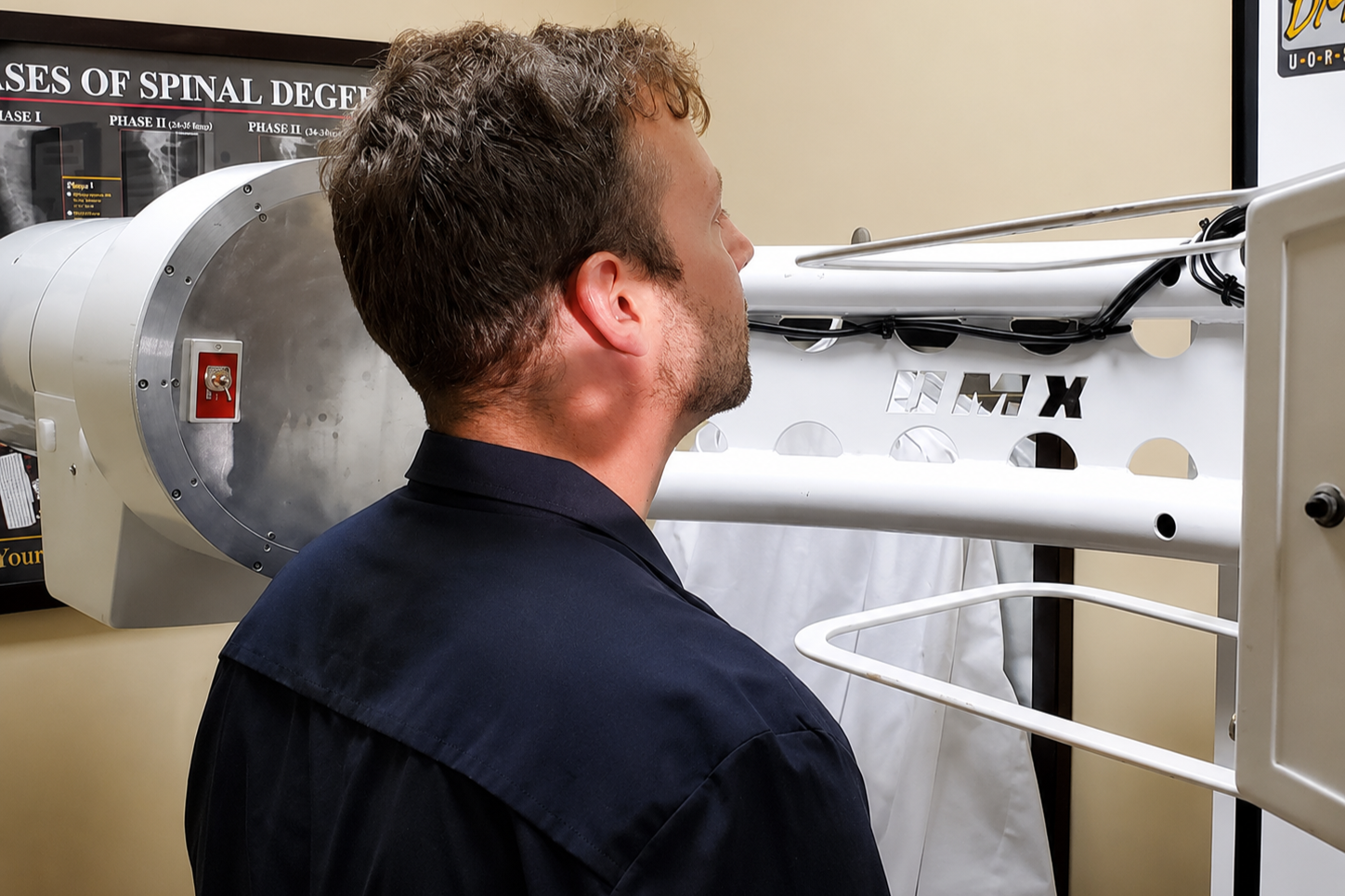
During the exam, the patient is positioned in front of the imaging system and guided through gentle movements while images are recorded. Exams tend to take around 15 to 30 minutes.
By showing the spine and joints in motion, DMX gives referring providers another way to better understand symptoms that may be difficult to capture with still imaging alone.
What is a Digital Motion X-Ray (DMX)?