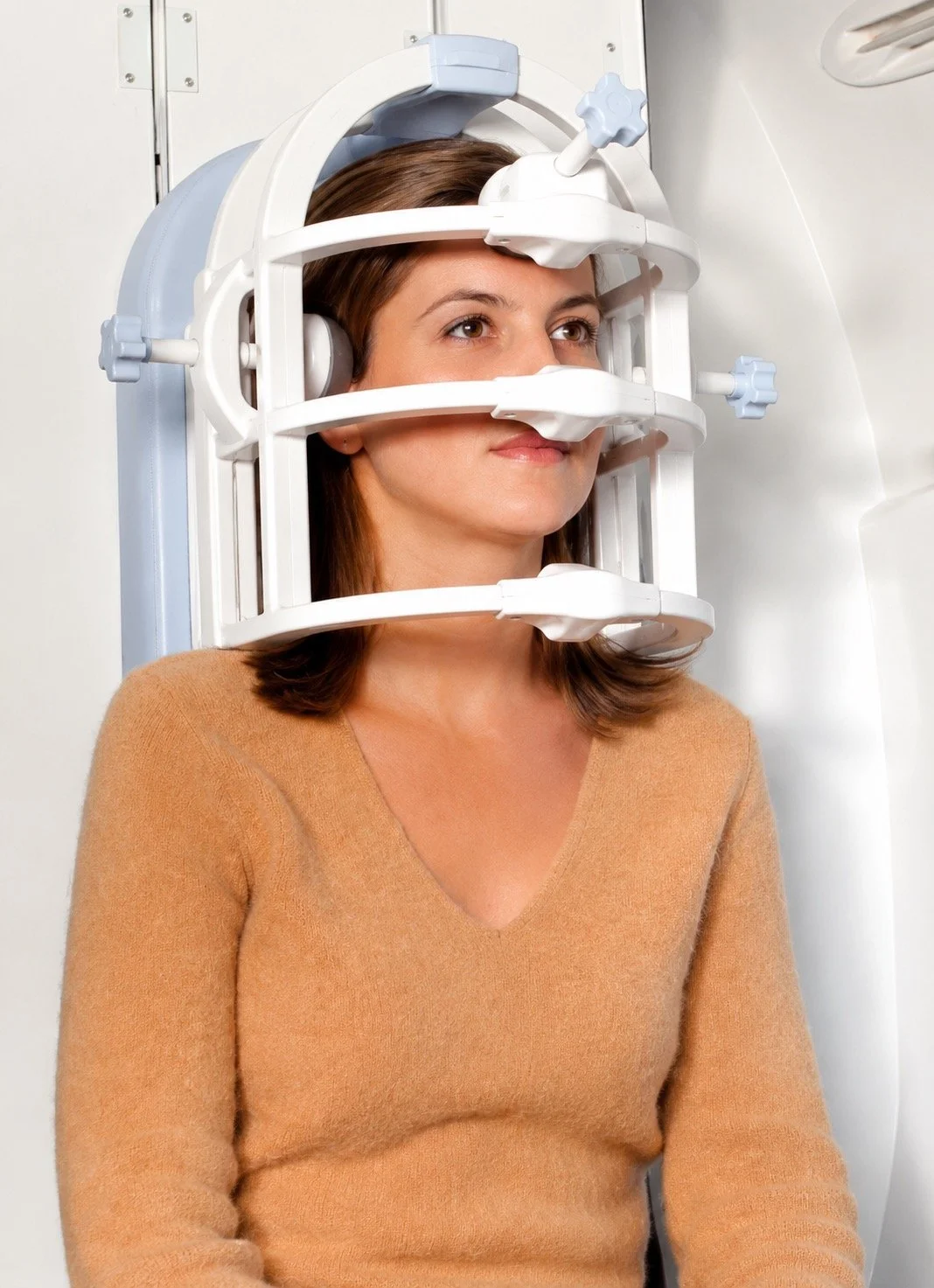
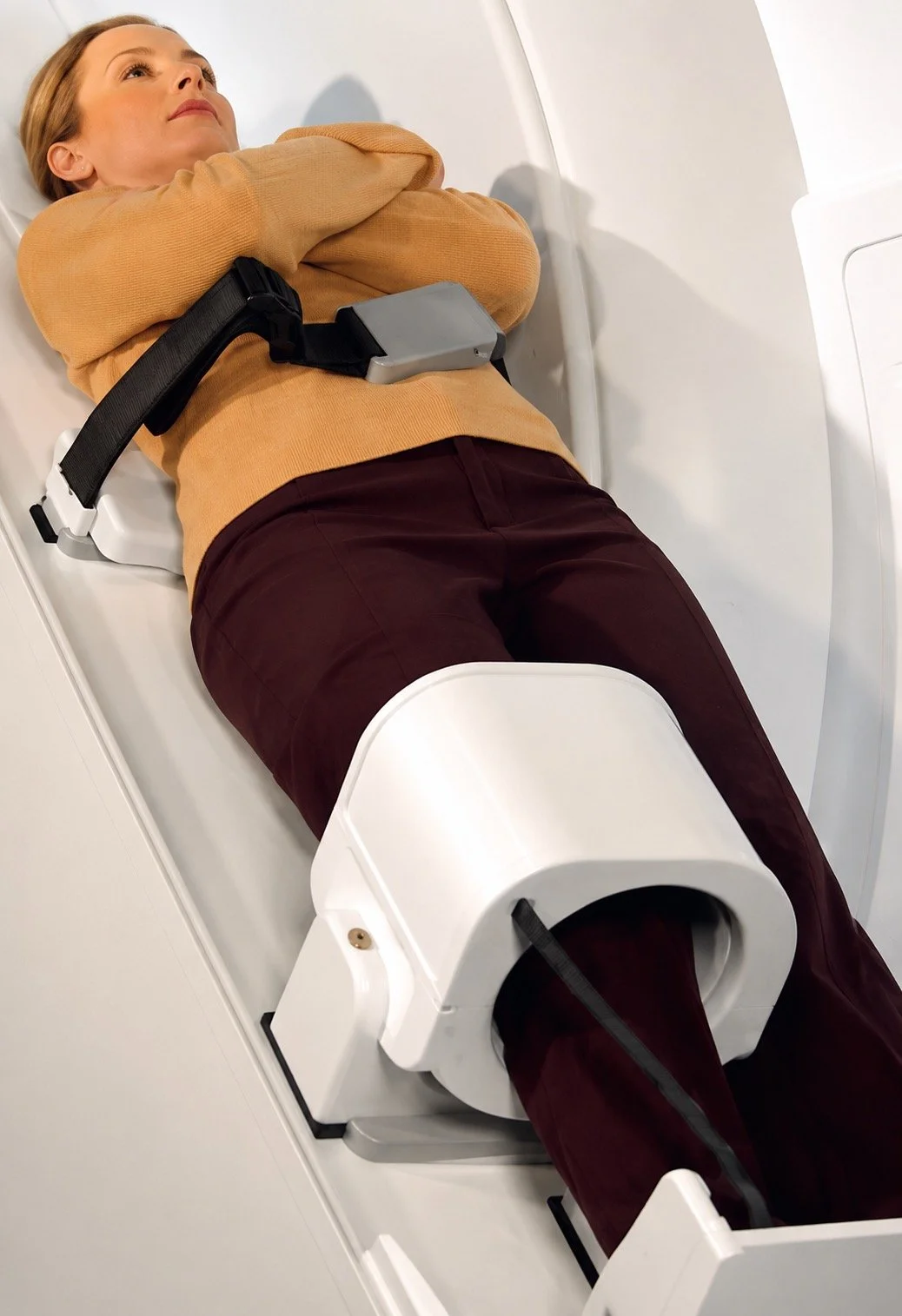
What is an Upright MRI?
An upright MRI is a type of open MRI system that allows the patient to be scanned while seated upright, allowing imaging to be performed while in natural, weight-bearing positions that more accurately capture how gravity affects the bones and joints. This can lead to more accurate diagnoses of many conditions, including craniocervical instability (CCI) and Ehlers-Danlos syndrome (EDS).
Upright MRIs provide an even more open experience than traditional open MRIs, as nothing is in front of or above the patient as they are scanned. This makes an upright MRI the most comfortable possibility on the market for claustrophobic patients, or for patients with pain or vertigo that prevent them from lying flat. Patients are even able to watch television during their scan, as opposed to being inserted into the usual “tube” of traditional MRIs.
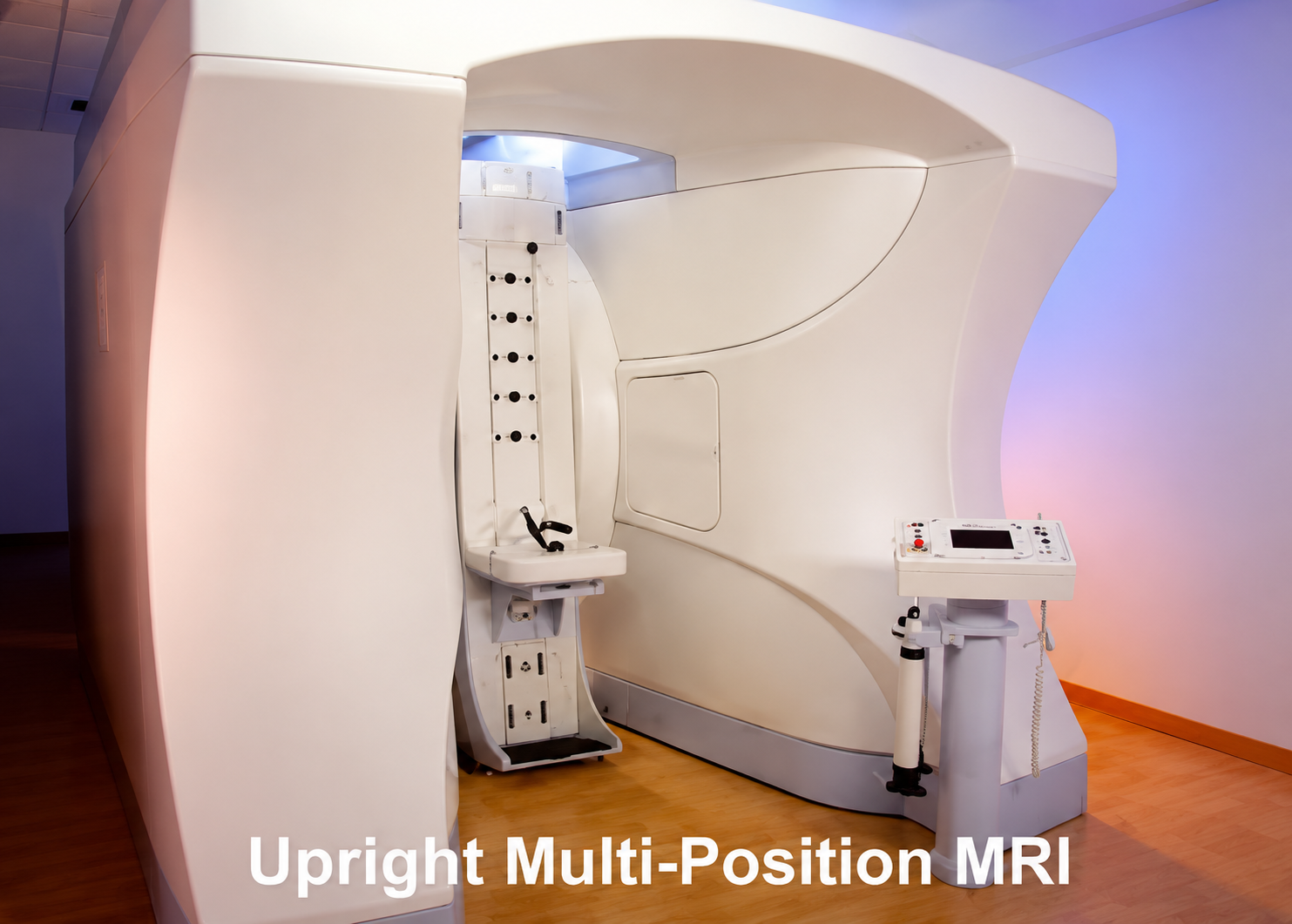
An upright MRI does not use radiation, making it a valuable option for patients who may need repeated imaging over time. For conditions such as scoliosis or ongoing spine problems, MRI can provide detailed images while helping reduce exposure to repeated X-rays when appropriate.
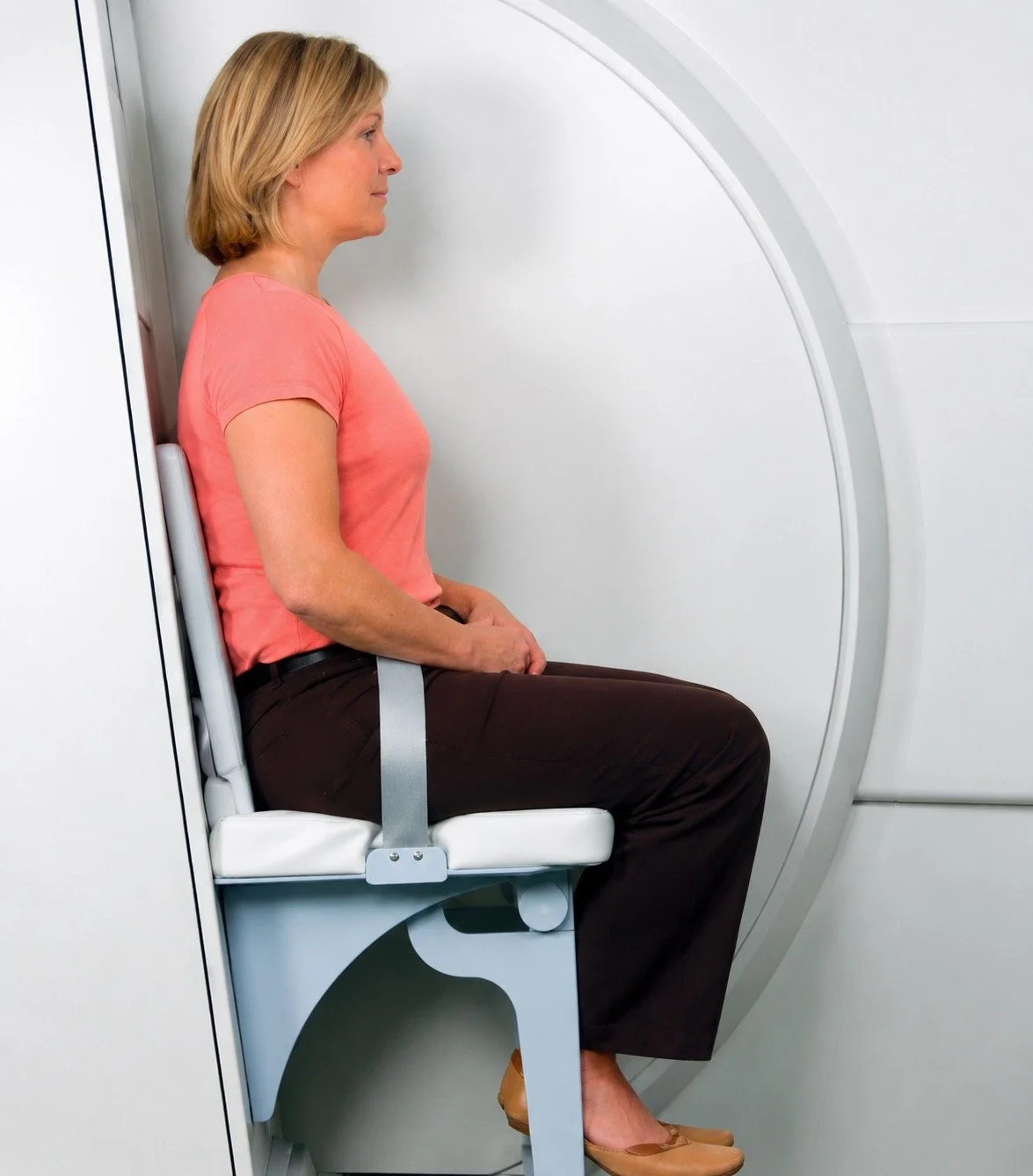
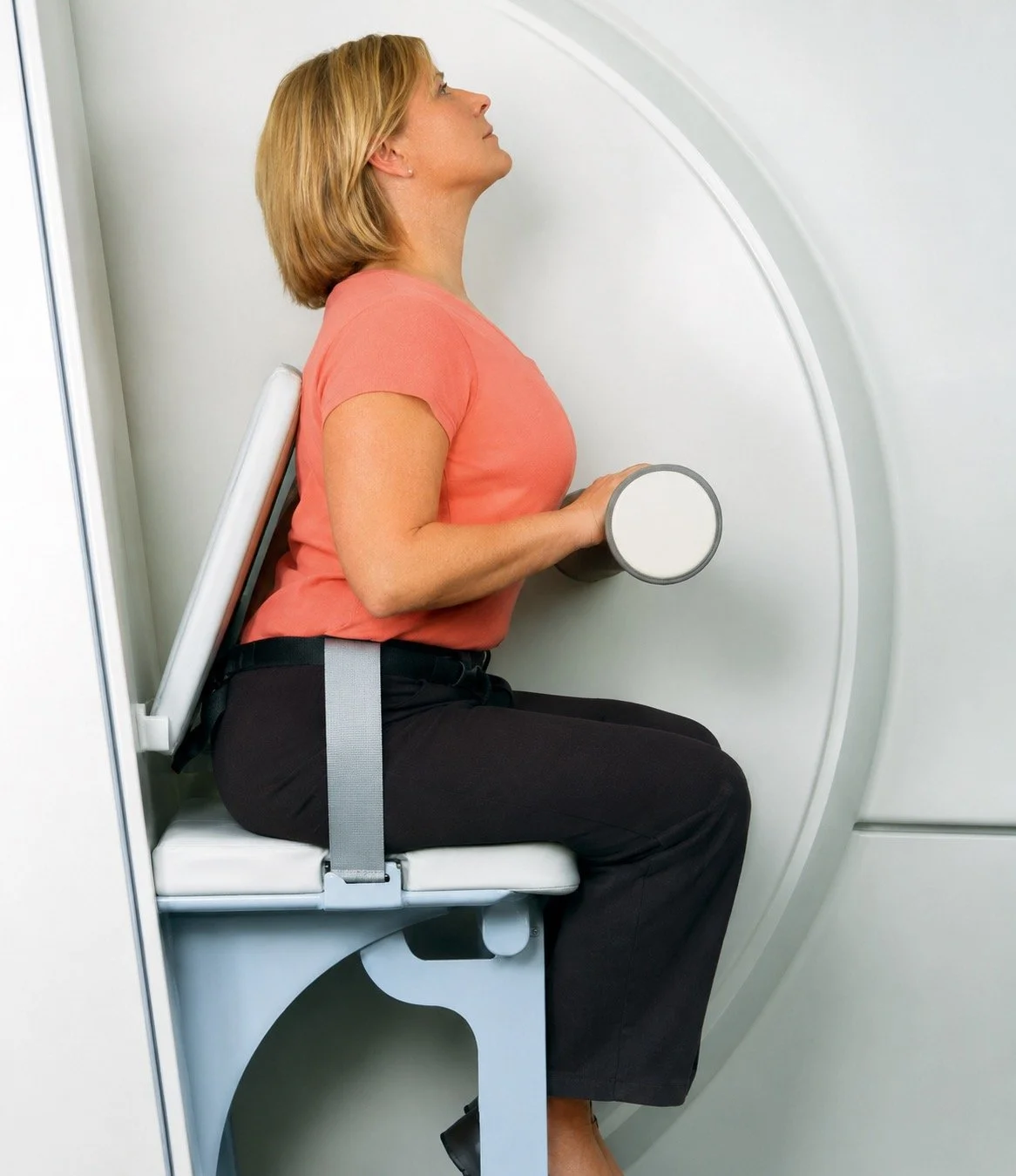
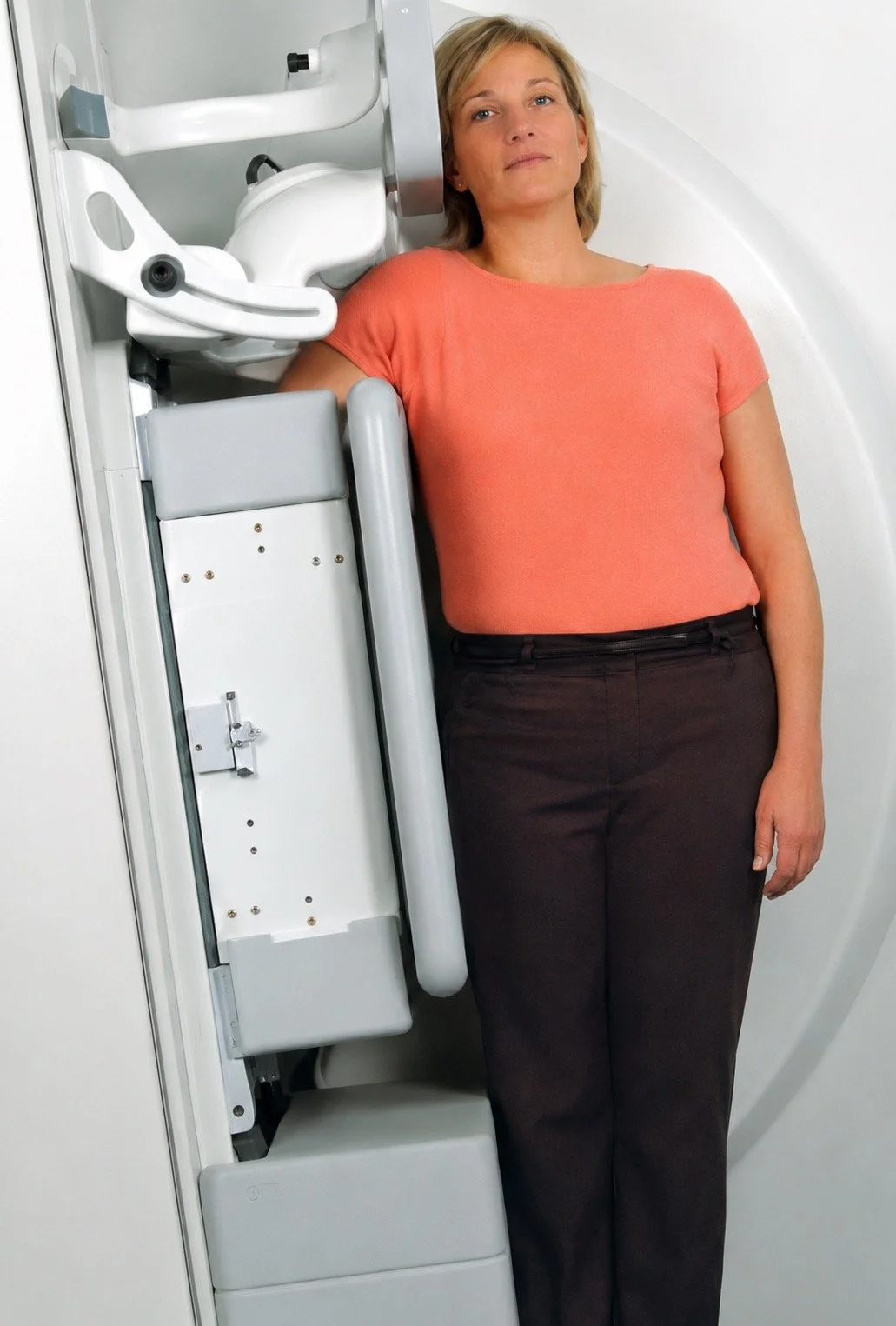
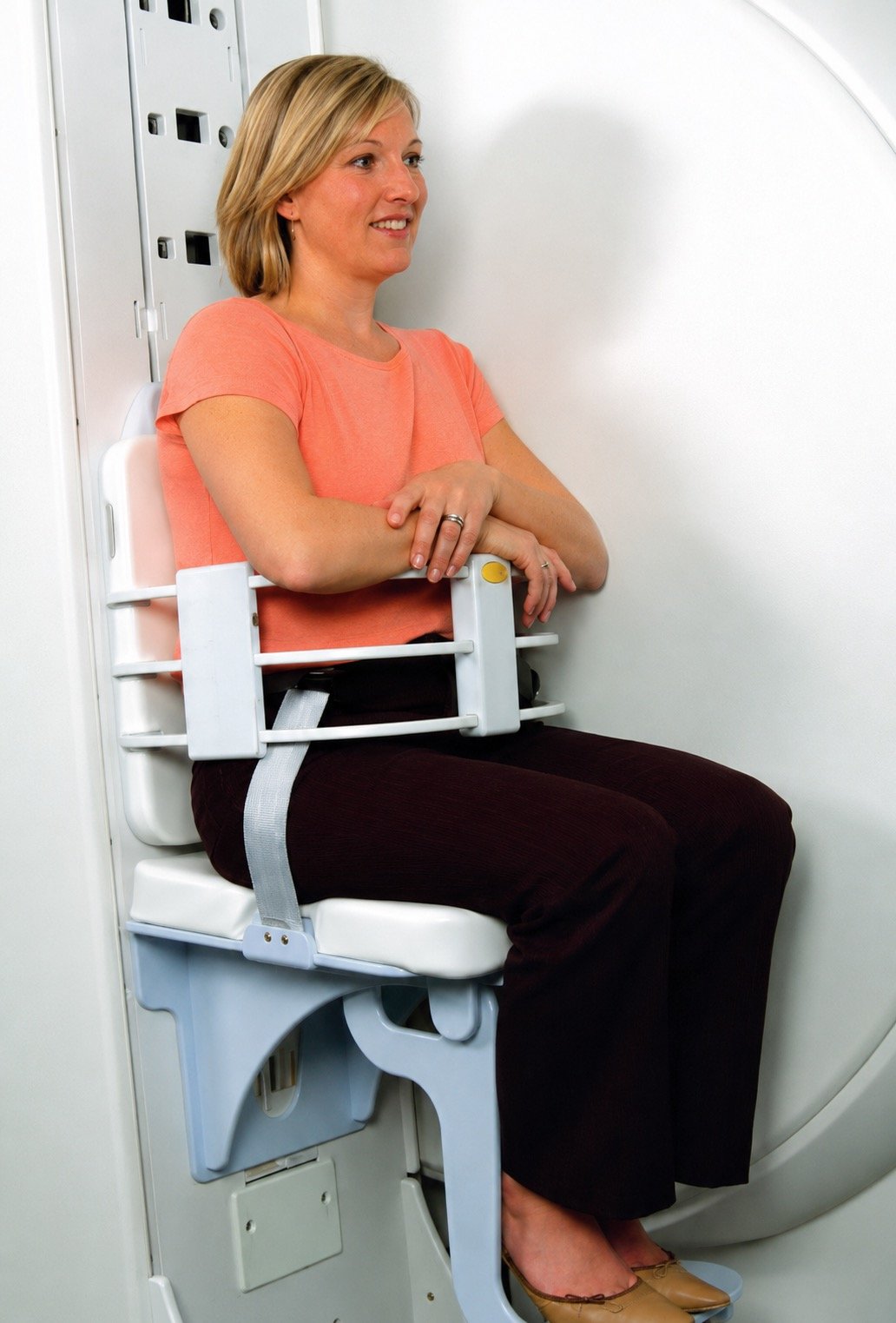
The images in the slideshow below demonstrate various positions that the upright MRI machine allows for, dependent upon the body part being scanned. All spinal scans and brain/head scans will have the patient seated completely upright.